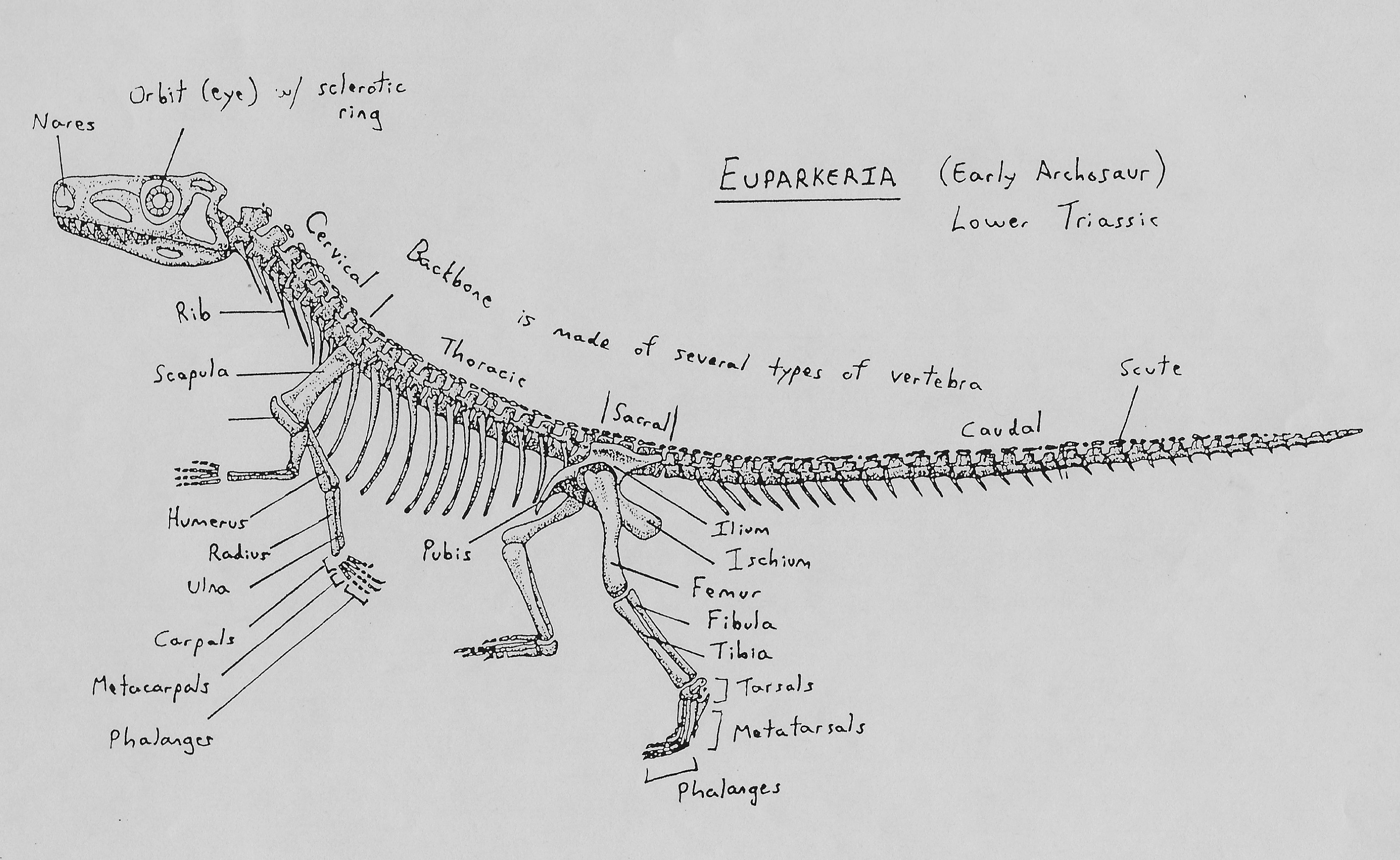
MORE DINOSAURS!
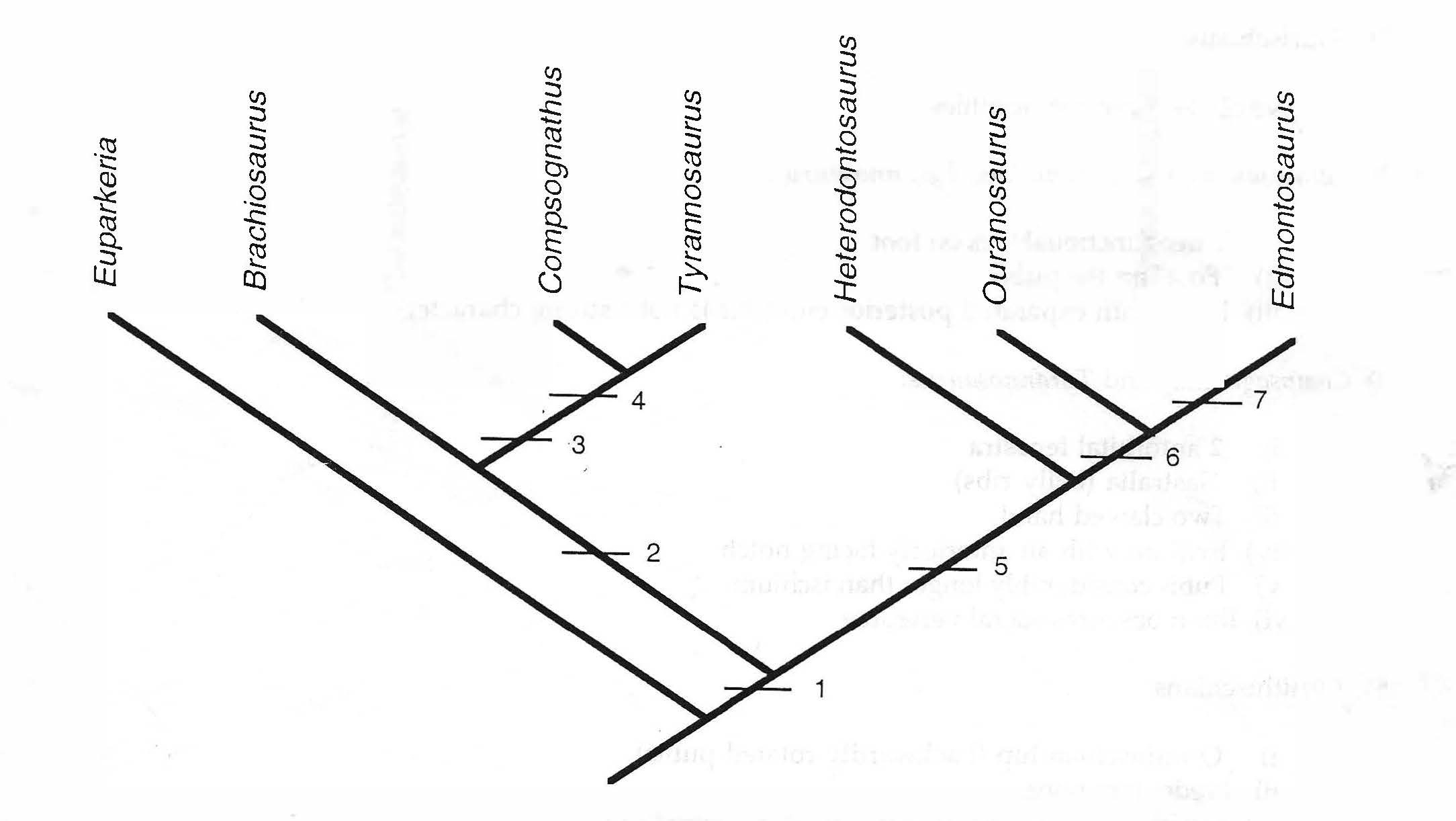
List of Nodes (aka synapomorphies):
- long, S-shaped neck, 5 or more sacral vertebrae (Eupareria has two)
- none
- three functional toes on foot, "foot" on pubis, illium with expanded posterior end
- two openings in skull in front of eye, belly ribs, two clawed hand, ischium with forward-facing notch, pubis considerably longer than ischium, illium obscures sacral vertebrae
- backwardly rotated pubis (ornithischian hip), predentary bone (front of lower jaw), ossified tendons connecting the tops of the vertebrae (lines on top of backbones), small (or missing) openings in skull in front of eye, no ribs on neck
- back prong of pubis reduced, front of pubis enlarged, hoof on third finger, three hoofed toes, duck billed (hard to see on some), loss of teeth at front of mouth, ribs vary greatly in length, more neck vertebrae
- back prong of pubis further reduced, only four fingers, increased desity of ossified tendons, tooth batteries, reflected flange on ilium